

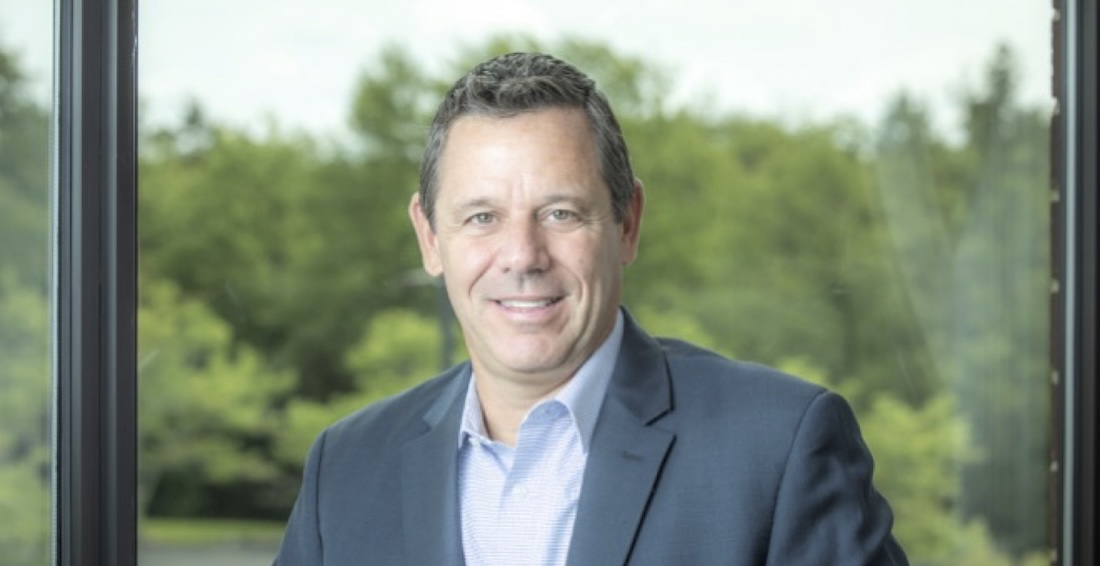
Jeff Drinkwater, Senior Director, Institutional Client Services and Todd Rosenzweig, Senior Director, Institutional Client Services, JTC Group, write that thanks to increased direct investor access to private funds and the sector’s reputation for high fees, fund of funds is on a fundraising slide. How can firms attract capital in a tough market?
The Fund of Funds (FoF) sector has proved itself to be a reliable way for investors to diversify and gain access to top-tier private funds while minimising risk. By aggregating capital calls and leveraging industry relationships, FoF managers can help high net-worth individuals (HNWI), or smaller institutional investors, target dozens of funds and hundreds of companies with a single investment.
This includes investments in funds that, in the words of a Vanguard report, “would otherwise be inaccessible to smaller or less-connected investors.” The report estimates that “replicating the level of manager access and diversification of a top-tier FoF across dozens of funds would require a portfolio of more than USD1 billion.” Instead, FoF investors gain access to “improved diversification and downside protection relative to buyout and venture strategies alone.”
The global FoF market size has been valued at approximately USD2.5 trillion, with North America being the largest market. The strategy has become popular enough that foreign governments, such as Qatar, and organizations like the NAACP have launched their own FoF vehicles.
Recent fundraising issues for fund of funds
But FoF has not been immune to the fundraising issues that have affected other sectors in recent years. A December 2024 analysis by PitchBook signalled worrisome trends for FoF when compared to other types of private funds. While the report notes that private equity fundraising declined 10.8 per cent over a 12-month period and venture capital fell 2.4 per cent, the total capital raised by FoF “dipped 44.5 per cent on the same trailing 12-month basis.”
However, prospects for FoF may not be as poor as these figures suggest. True, some individual investors will no longer need a FoF manager for access to private markets, but they may still require an intermediary to access the top private funds and hedge against risk through diversification.
An article from Russell Investments explains that the success of private funds has led to a drastic increase in their number, stating that, “from 2000 to 2023, the number of funds grew from 1,551 to more than 12,500.” Along with that increase, there is also the issue of quality.
Stating the clear fact that “manager selection is crucial to fund performance,” the article notes that “the annual internal rate of return (IRR) between top and bottom quartile private-markets funds has historically been as much as 25.24 per cent.” Retail investors may be gaining access to private markets, but they cannot select funds with the skill of a seasoned FoF manager.
If retail investors do try to invest with individual funds, they may find out the hard way that selecting the right manager is a difficult task, and the risk of ending up with the wrong fund is very real. When that happens, they are likely to look for a safer option, which FoF can provide.
Diversification, downside protection, and the fee crunch
The expertise of a successful FoF manager comes with a cost in the form of fees.
As explained by Business Research Insights, “Investors can end up paying multiple layers of fees, including fees charged by the FoF manager and fees charged by the underlying funds. These fees can significantly reduce overall returns, particularly in a low-return environment. As a result, some investors may choose to avoid FoFs altogether.”
FoF managers are quick to point out that while an FoF may involve higher fees, it also offers greater downside protection. Vanguard concluded, “the value provided by an FoF has the potential to exceed these costs through improved diversification and risk-adjusted returns, superior manager access and selection, and capital call and operational simplicity.”
But when markets are not offering the returns investors desire, they may be unwilling to pay higher fees despite the potential benefits. The only way to win those investors back is via a change in strategy.
How fund of funds managers will need to change their approach in order to compete
To attract capital in a difficult environment, FoF managers must overcome the sector’s reputation for being costly. While analyses have shown that FoF fees can be made up in performance over the long term, that will not solve the issue for an individual manager.
FoF managers will need to lean on their track records and demonstrate the value they bring. While diversification, downside risk, access, and simplicity may be enough to get an investor interested in FoF as opposed to other fund types, the way to set your fund apart from others in the sector is to be flexible on fees.
But the fees levied by FoF are not an accident – they are necessary because of the greater amount of work it takes to manage investments across a portfolio of funds, each of which has a series of investments that must be evaluated. FoF managers must deal with large amounts of data and have numerous General Partners to communicate with, including those managing funds in the FoF portfolio and those engaged on a co-investment basis.
A FoF manager cannot simply lower fees without reducing costs elsewhere. In order to compete on fees, managers will need to find ways to be more efficient. This is where a fund administrator, such as JTC, can help.
Outsourcing fund administration can improve efficiency for FoF, but only if it is done correctly involving an expert and experienced team and the offer of bespoke institutional-grade services to all clients.
FoF is coming off a challenging period, and managers will need to rethink how they operate in order for the sector, and the individual funds that make up that sector, to remain viable. FoF managers must look to compete on fees, but doing so requires an understanding of how to become more efficient, and this requires the involvement of a leading administrator offering experience in a wide range of asset classes and with the ability to translate this into bespoke FoF solutions.




